Nobody knew what he looked like. And nobody knew exactly where he was. Only when the Brazilian Congress threatened to issue an international arrest warrant, did Julio Faerman, the mysterious agent of Dutch multinational SBM Offshore, emerge from the shadows that for decades had been his natural habitat, decades during which he helped win tens of billions of dollars in contracts from Brazil for the Dutch company.
And for every order, Faerman also received cheques into his accounts in tax havens such as the British Virgin Islands, money he then funnelled to senior officials at Petrobras.
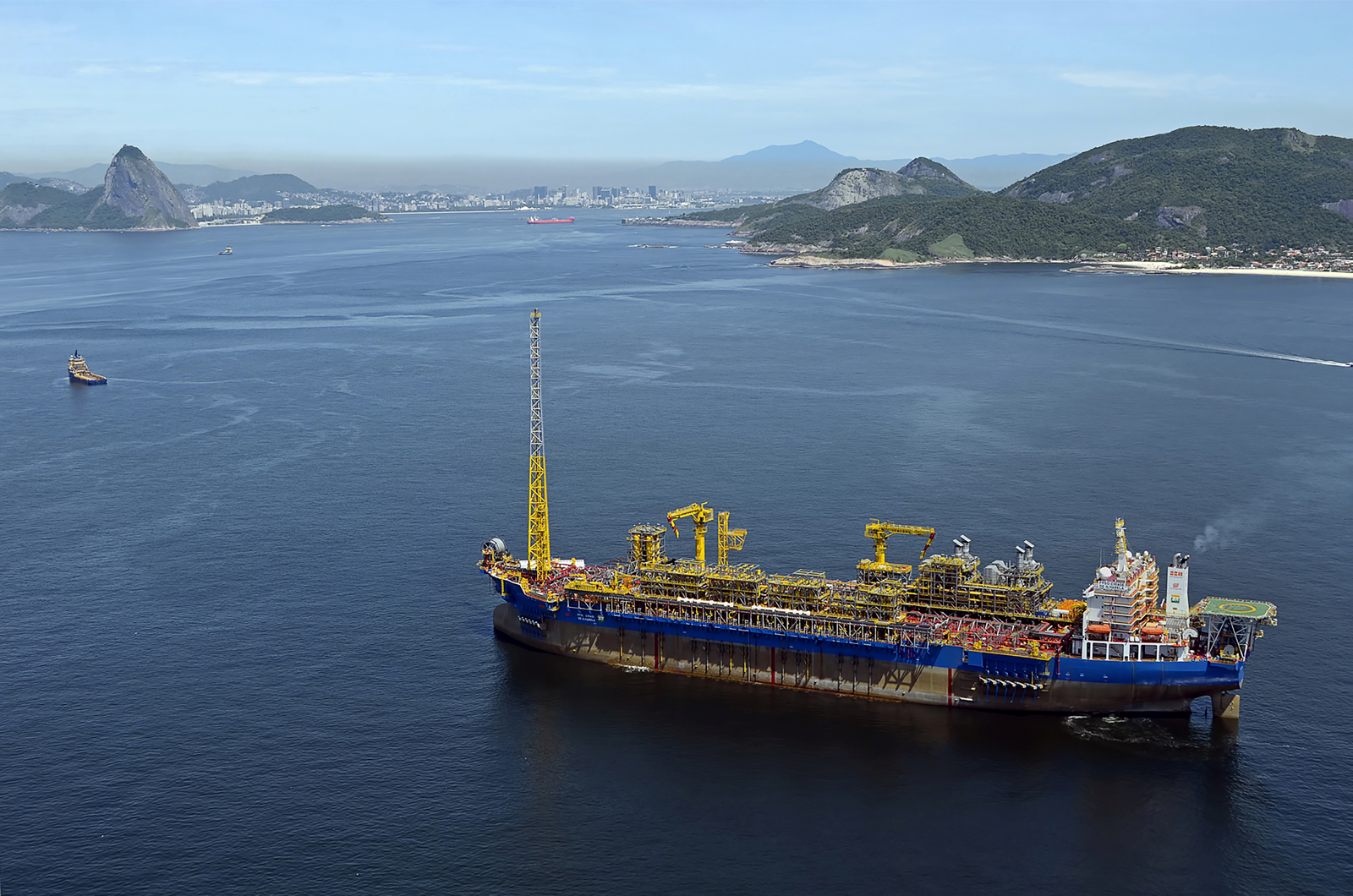
The Brazilian state oil company is by far the most important customer of SBM which builds and leases platforms for the production and storage of oil and gas at sea (FPSOs). The smartly turned-out Faerman appeared before the Petrobras parliamentary committee (CPI) in pinstripes. It was the first time journalists and the general public to see what he looked like. In the only known photo of him, his face was half-hidden behind a silver Venetian carnival mask. He has since grown a beard.
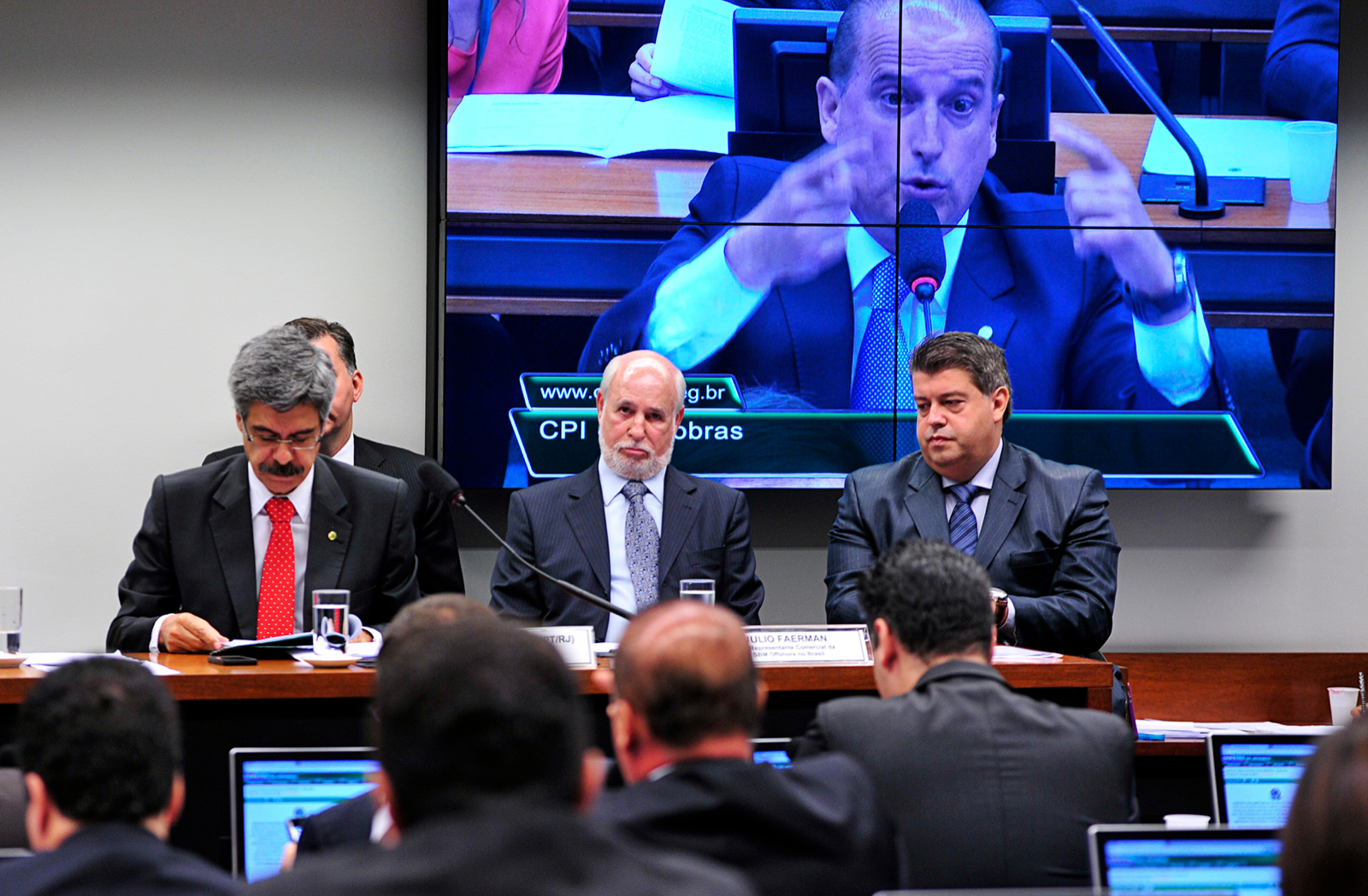
But when the spider in the web of the massive SBM/Petrobras corruption case appeared in front of the camera on 9 June, the 77-year-old businessman presented a somewhat defeated figure. Three times he had ignored the summons to testify before the CPI, tasked by parliament with holding the inquiry into the Scandal of the Century, as some are calling it. Hence the media circus.
The Faerman hearing developed into a fascinating case study in political theatre, with the opposition continuing to use the scandal at Petrobras to try to dislodge President Dilma Rousseff from her precarious throne. After all, at the time of the corruption was taking place, she was the Chairman of the Supervisory Board of Petrobras and should have know of the abuses.
Furthermore, in recent months, a number of senior Rousseff associates including the treasurer of her party have been charged with receiving bribes in relation to the Petrobras case. One allegation is that her Workers Party coffers were filled with dirty money: SBM alone has been accused of having contributed — via Faerman — $300,000 to Rousseff’s re-election in 2010. At least that’s what Barusco Pedro, one of the arrested Petrobras employees says. In exchange for a promise of a reduced sentence he has been co-operating with the (independent) public prosecutor. The opposition suspects that the investigations into the corruption were delayed under pressure from Rousseff until after the presidential elections in October year. She won those elections by a wafer-thin margin. Rousseff’s approval ratings have fallen to record lows amid the scandal and an economy in recession.
Right to remain silent
Flanked by two lawyers, Faerman told the somewhat surprised committee members that since mid-May he had been negotiating with the Federal Ministry of Justice — part of Rousseff’s fiefdom — in order, it seems, to arrive at a similar deal to Barusco’s. Only when that deal is made, will he tell the authorities how SBM Offshore managed to win orders for tens of billions of dollars from Petrobras. But a crucial difference with the Barusco deal is that, that according to the draft agreement presented to the committee, Faerman’s testimony will be given in secret.
Nor will the elderly “entrepreneur” be held under lock and key. It looks like a blatant attempt to prevent his story ever going public. “Because of my age, emotional state and health I appeal to my right to remain silent,’ Faerman said. But will it work?
Committee members refused to be elbowed aside and threatened to release information derived from his banking and email accounts and to summon his (adult) children for cross examination. His children also worked for the shadowy trading companies their father set up and ran. Faerman’s passport was ordered to be confiscated and it was even proposed that he wear an electronic tag, due to flight risk.
“We are now a white swan in a pitch-black sea,” said a relieved and proud SBM director Sietse Hepkema in an interview last December
While in Brazil the Petrobras corruption affair — and SBM Offshore’s major role in it — is inexorably building to a climax, the temperature in Netherlands appears to have dropped after a record settlement was reached with the Dutch Public Prosecutor (OM) in November last year. The biggest corruption case in the Dutch history was bought off by SBM for a record $ 240 million in exchange for which no court case followed and no admission of guilt was entered.
To the OM it was important the company had implemented major reforms to prevent re-offending. “We are now a white swan in a pitch-black sea,” said a relieved and proud SBM director Sietse Hepkema in an interview with leading Dutch newspaper NRC Handelsblad last December. The man hired to clean up the company said he didn’t expect further fines in Brazil. “I really think we paid our dues, “he said. And “I refuse to be Brazil’s smelly kid in the classroom.”
But in Brazil, it seems, they saw things differently. Earlier this year, a leak to respected newspaper Folha de Sao Paolo said that SBM was facing a whopping $1.7 billion fine. The company quickly denied the report. Negotiations about a possible settlement were still at an early stage, it said, and amounts had not been discussed. In February this year Vrij Netherland published (See vn.nl) a reconstruction of the SBM Offshore affair, based on SBM internal documents and secret recordings made by whistleblower Jonathan Taylor, who went public for the first time in our publication. Taylor worked from 2003 to 2012 as a lawyer for the Monaco-headquartered but Dutch-registered and listed company. Last year, he was a key informant of both the OM and the Brazilian authorities. Taylor accuses SBM of trying to cover up the corruption affair as far as possible and of consistently lying about what the company knew all along about the wrongdoing. In this way, the company misled the markets for many years.
Further, by keeping silent about the evidence it had, the precariously positioned company managed to gain time, bring in crucial financing and win billion-dollar orders in Brazil. SBM has always denied these allegations and refers to Taylor, who has a financial claim on the company, as a blackmailer.
In September 2014, SBM filed a complaint against Taylor in the delightfully Ruritanian jurisdiction of Monaco. But nearly a year later the judge hasn’t even contacted Taylor, and the case has gone nowhere, let alone come to trial. The office of the prosecutor in Monaco pointedly refused to answer all questions concerning the case put to it by Vrij Nederland.
Because of Taylor’s revelations in Vrij Nederland and the Dutch monthly Quote magazine, the investigation in Brazil gained momentum. On 19 May, near London, Taylor gave a six-hour briefing to a delegation of Brazilian parliamentarians on the role of Faerman, among other things, and spoke to journalists afterwards. The very next day, the politicians demanded the arrest of Faerman, with the result that Faerman finally appeared in front of the CPI on 9 June.
While the discussion in Brazil focuses mainly on the question of the political consequences of the corruption, in the Netherlands debate revolves around the question of the information SBM provided to the market.
After all, thanks to an SBM internal investigation of which lawyer Taylor was a senior member, there was already plenty of evidence in early 2012 that large bribes had been paid in Brazil. What remained unknown then, was to whom and exactly how much.
As normal as brushing your teeth
Internally, twelve so-called red flags for Brazil were identified, strong evidence that together
hardly left any room for doubt. Faerman had for many years received excessively high amounts of money for his work, was paid via accounts in the British Virgin Islands, often without receipts being issued. In total, well over $100 million. (In early 2012, it was estimated that he would be entitled to more than $200 million more over the lifetime of existing projects). Contracts were found with handwritten notes by former SBM CEO Didier Keller. showing commission amounts. The former sales director described in an interview with the then newly appointed CEO Bruno Chabas how paying bribes SBM was as normal “as brushing your teeth or drinking a glass of water.” There were also confidential Petrobras documents found which were leaked to Faerman and passed to SBM with the aim winning publicly tendered contracts in an improper way. All this was known in early 2012.
And in countless e-mails in cryptic language there were references to unlawful payments. A recording by Taylor shows that at a early stage it was clear to SBM directors that money had in all likelihood ended up in the pockets of Brazilian politicians.
If that had come out, it was feared, there would have been immediate and incalculable consequences. Not only for SBM, but also for the ruling Workers Party of President Dilma Rousseff. And that is exactly what might happen right now.
In a not-previously published document from SBM’s American law firm Paul Hastings dated 23 April 2012, Brazil is number two on the list of priorities, just below Equatorial Guinea but above Angola. In the case of Equatorial Guinea, concrete information had already been found on a computer for the paying of bribes to the local dictator’s son and his entourage: ‘Shopping money, BMW’s, apartments and education for children abroad.’
But after Sietze Hepkema started working for SBM, Brazil was ‘disappeared‘, despite the fact that matters there were political and financial dynamite. Petrobras was by far the biggest client for SBM, with revenues rising to more than 60 percent of SBM‘s total global turnover. Brazil, the new management decided, had to be investigated at a later point. This was christened ‘containment strategy’. Part of it was to minimally inform the authorities, shareholders and media about the “possible” wrong-doings. At shareholder meetings and in press releases the management for two years failed to mention the problems outside Equatorial Guinea and Angola. Only at a much later stage, when they could no longer ignore the evidence in the public domain, did Brazil came back into the picture.
Curious manoeuvre
On 6 February 2014, in response to an article in Quote magazine, SBM categorically denied there had ever been “containment“. It was only when the company was confronted with the VN article in February this year which included excerpts from emails and recordings where Dutchman Hepkema literally gave the order to ‘take Brazil out’, that SBM’s Hepkema was forced to into a curious manoeuvre. He decided, without reference to any dictionary, to give the English word ‘containment’ a brand new meaning. It meant, he insisted not simply ‘to limit’ but to limit in such a way as to make an ‘orderly investigation possible’. He got away with it at the shareholders meeting in April and was even praised for his decisive action.
Taylor maintains that the market has been misled by years of concealed information. One thing is certain: because the case never went to court, and SBM has never been forced to produce any documentation, questions remain unanswered. Up to now, the Dutch stock market regulator (AFM) has not seen fit to launch an investigation. The AFM declines to comment, because that could influence the markets. Perhaps the testimony of Faerman in Brazil will shed a new light on the case. But for that to happen, his statements have to be made public.
The Dutch Association of Shareholders (VEB) is so far the only institution in The Netherlands to probe SBM Offshore with critical questions. On 26 May, SBM’s CEO Bruno Chabas wrote a 26-page reply to a list of 30 questions submitted by the VEB. It was in essence the same old story that Hepkema and the others have repeated time and again: that SBM has cleaned up its act, everything was done according to the rules, no problem. But on crucial points the company gives evasive answers. For example, it only recognizes four out of the twelve ‘red flags’. Chabas, who said in a recording ‘not to dig to deep’, doesn’t remember he ever said that, but doesn’t rule out he did. In his answer to VEB he states that if he said something of the kind, it was because he was recently appointed as CEO, was afraid for the company’s ‘survival’ and didn’t know whom to trust.
What is striking is that SBM has never admitted guilt for the widespread corruption the company was clearly guilty of — not merely known among but indeed orchestrated by the senior management over many years — either in statements after the deal with OM was announced or in its recent answers to questions of the VEB.
SBM states that ‘the accountants were “informed at the outset of the internal investigation and were regularly updated’
SBM also reacts evasively when the VEB asks for the exact date on which former accountants KPMG was informed about the findings of the internal audit report on third party agents, dated 17 April 2012. Knowledge of such a document might have made it difficult for the accountants to approve SBM’s annual accounts. In answer to a further question by Vrij Nederland for an exact date when KPMG were informed, SBM again answers in general terms and states that ‘the accountants were “informed at the outset of the internal investigation and were regularly updated’.
And then there is the date on which director Hepkema started work at SBM. Was it 1 May, 2012, as SBM states in answer to VEB? In a never previously published document in the possesion of Vrij Nederland it is clear that Hepkema was already in complete control of things on 17 April. On that date he gave orders by email to lawyers of the American firm Paul Hastings not to attend an interview with Julio Faerman in Monaco. (Curiously, SBM would interview Faerman only one more time, by phone in March 2014 after the publication of the damaging February 2014 Quote magazine article).
Confronted with this new document, the company suddenly changes its tune and says that Hepkema didn’t start on 1 May, but reverts to the press release of 10 April , the day his appointment was announced in a press release. Curiouser and curiouser.
And then there appears to be a another possible instance of misleading the markets. Already in May 2014, the Dutch public prosecutor knew through its mutual assistance agreement with their Swiss counterparts that there was concrete evidence of payments by SBM’s agent to Brazilian officials at Petrobras, ie bribery. We know this only because the former Petrobras CEO Maria Graca Foster issued a statement during her 17 November 2014 testimony to the Brazilian parliament. She said SBM director Bruno Chabas had called her on 23 May and wrote her a letter three days later informing her of the information given to SBM by the OM.
Turbulent developments
As a ‘suspect’ in a criminal case SBM was free to do with the information what it wanted, says the OM. (The OM also says there was no confidentiality agreement to prevent SBM handing over information received from the OM to third parties.) But the question then arises again whether the company has misled the markets. SBM shared the information with partner-in-crime Petrobras, but not with shareholders or the market. SBM CEO Chabas said during the presentation of the interim results on 6 August 2014 that there were ongoing investigations, but kept back that he had concrete evidence of wrongdoing in relation to Brazil.
Whether SBM Offshore will come through unscathed considering the turbulent developments in Brazil is highly questionable. What is beyond dispute, however, is that management board members Chabas, Hepkema and the chief financial officer Peter van Rossum have been rewarded handsomely for all their hard work in recent years. For Hepkema this amounted to a generous four million euros in 2013 — the most recent year for which the information has been made public. After the media buzz that publication of this figure in February generated, the company promised there would be no base salary increases in 2015. Hepkema has now retired from day-to-day management and been elected to sit on the company’s supervisory board. In that position, he can keep a close eye on whether SBM abides by his rules.
This is a slightly emended version of the article which appeared in Dutch in Vrij Nederland on 18 June 2015.
Je reactie wordt geplaatst zodra deze is goedgekeurd. Je reactie is geplaatst.