You are a new refugee in The Netherlands. How do you deal with difficult moments, and how can you build a new life in this country? Here’s some advice from refugees who came to The Netherlands before you.
At the AZC (The Centre for Asylum Seekers)
1. Settle in first
Ilias Mahtab (28, civil servant for the Department of Foreign Affairs, fled Afghanistan in 1998): ‘When I first arrived in the Netherlands, I had travelled a long way from Afghanistan. And now I was here, in The Netherlands, a nation in which doors open automatically and people use cash registers instead of an abacus. I felt completely stoned, as if living between dream and reality. I really needed time to acclimatize.’
2. Stay out of fights
Babak Amiri (45, musician, fled Iran in 1991): ‘In the asylum center the atmosphere often is tense. That’s logical. If you consider the fact that hundreds of traumatized people are kept together, it’s more surprising people don’t fight every day. Stay out of quarrels or fights.’
3. Don’t stay in bed during daytime
Ilias Mahtab: ‘Many refugees close the door of their rooms and pull the sheets over their heads. That’s a sign of depression. Try to talk to people who understand you as a way of therapy.’
4. Buy a bicycle
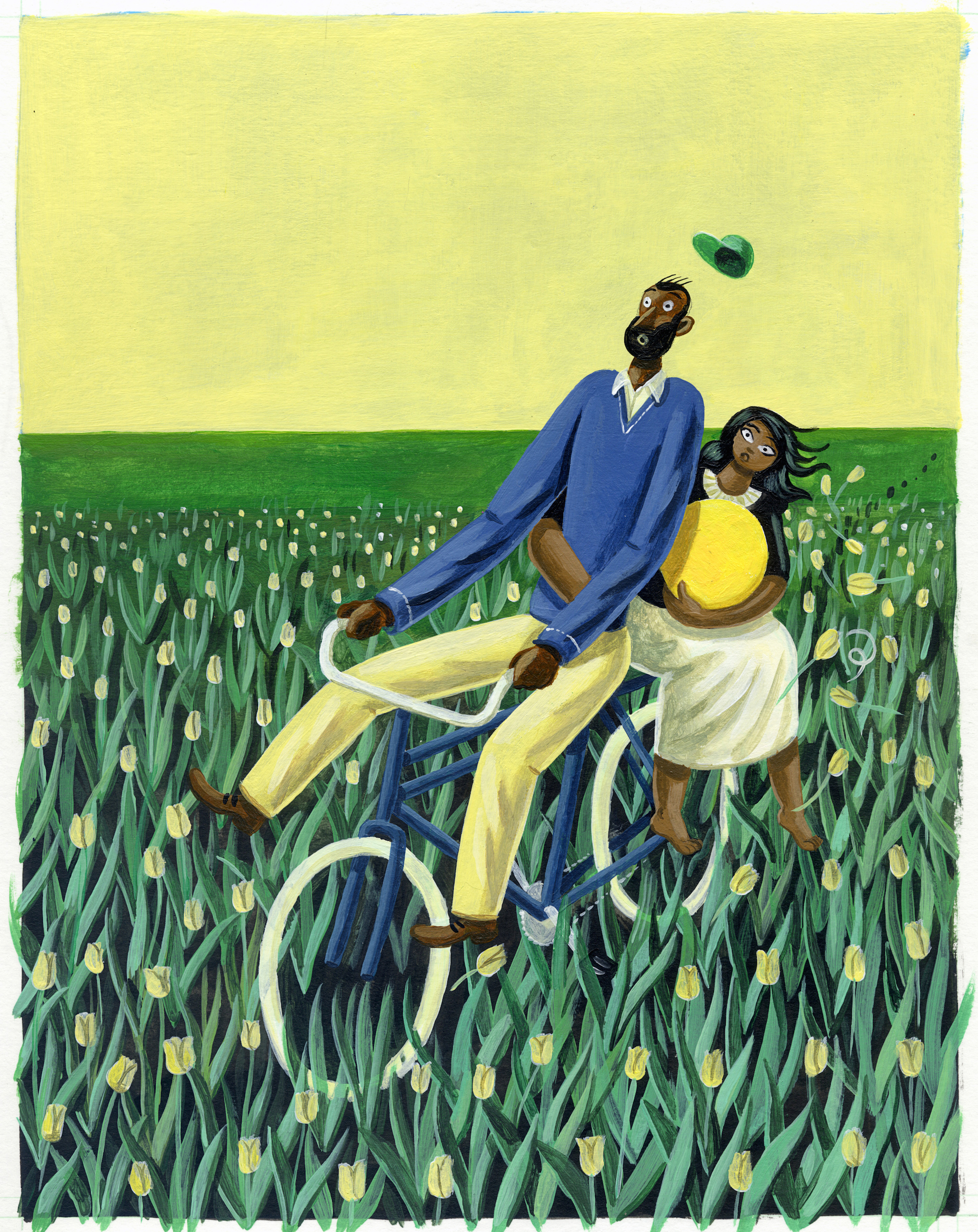
Babak Amiri: ‘When you ride your bike, you deeply engage with the landscape, and you don’t think so much about your troubles. I took many bike-tours through Noord-Holland, from Alkmaar to Heiloo and Heerhugowaard. Beautiful scenery.’
5. See yourself as a baby
Ozjan van Schuylenburg-Isso (28, entrepreneur, fled Syria 8 years ago): ‘A lot of people keep thinking about their lives at home, when they had a job, friends or family. If you hold on to who you were, you become depressed. Try to see yourself as a brand new baby that has to learn everything from scratch. And every little accomplishment you make is just as amazing as a baby learning to walk.’
6. Redecorate your room every three week
Hariwa Negisa (27, student, fled Afghanistan in 1999): ‘As a child, I never had the feeling that the four of us were cooped up in a tiny room. That was because my mum moved the furniture every three weeks. In doing so, she created this illusion of possibilities in this small room.’
7. Pretend you are an exchange student
Leila Jazjy (25, fled Syria three months ago): ‘I left my sisters and my parents behind in Aleppo. I think about them constantly. Sometimes I fool myself into believing I am an exchange student. I always wanted to study abroad. Well, this is my chance to do so.’
8. Exercise
Ilias Mahtab: ‘I started playing soccer, my mother got into swimming and my brother played volleyball. Exercise clears your head, so that you are able to think.’
Living outside the AZC
9. Explore where you want to live
Mardjan Seighali (51, director of student refugees organization UAF, fled Iran in 1991): ‘I had two options: Ouderkerk aan de Amstel or Almere. I rented a car and decided to go and have a look myself. Almere looked like a brand new city, very close to Amsterdam. Nowadays, the PVV (popular right-wing party that opposes immigration and Islam) is the biggest party there, but at the time Almere was a good choice.’
10. Leave as soon as you can
Baban Kirkuki (41, poet, fled Iraq in 1999): ‘I put an ad in a local newspaper in Utrecht, and as soon as I found a room I moved out of the AZC. I could have waited until they allotted me a better and bigger house, but that small room made me so proud. I went to Ikea (European chain that sells affordable furniture) ecstatically happy and bought a “Billy”-bookcase.’
11. Be amazed and curious about your new environment
Baban Kirkuki: ‘I remember walking past a garden, where an old woman was working. She was wiping little statues of “kabouters” (popular Dutch fairy-tale figure, a dwarf with a pointed hat) with a cleaning rag, and gently putting them back in the grass. I must have stood there for at least 15 minutes, it was such a beautiful sight.’
Learning the language
12. Buy a dictionary
Ozjan van Schuylenburg-Isso: ‘For a long time, my dictionary was my best – and only – friend here in The Netherlands. I took it with me everywhere I went. Babak Amiri: ‘In the morning, after my cup of coffee and cigarette, I took my dictionary with me to the toilet, to learn one or two words.’
13. Pretend you don’t speak English
Babak Amiri: ‘Dutch people love to talk English. But it is not their mother tongue, and neither is it yours. Before you know it, people will switch to Dutch and you’ll be excluded from the conversation.’
14. Be honest if you don’t understand a word or sentence
Mardjan Seighali: ‘Foreigners often feel stupid if they ask something. But don’t be afraid to ask what a word means, Dutch people actually appreciate your honesty.’
15. Read Nijntje
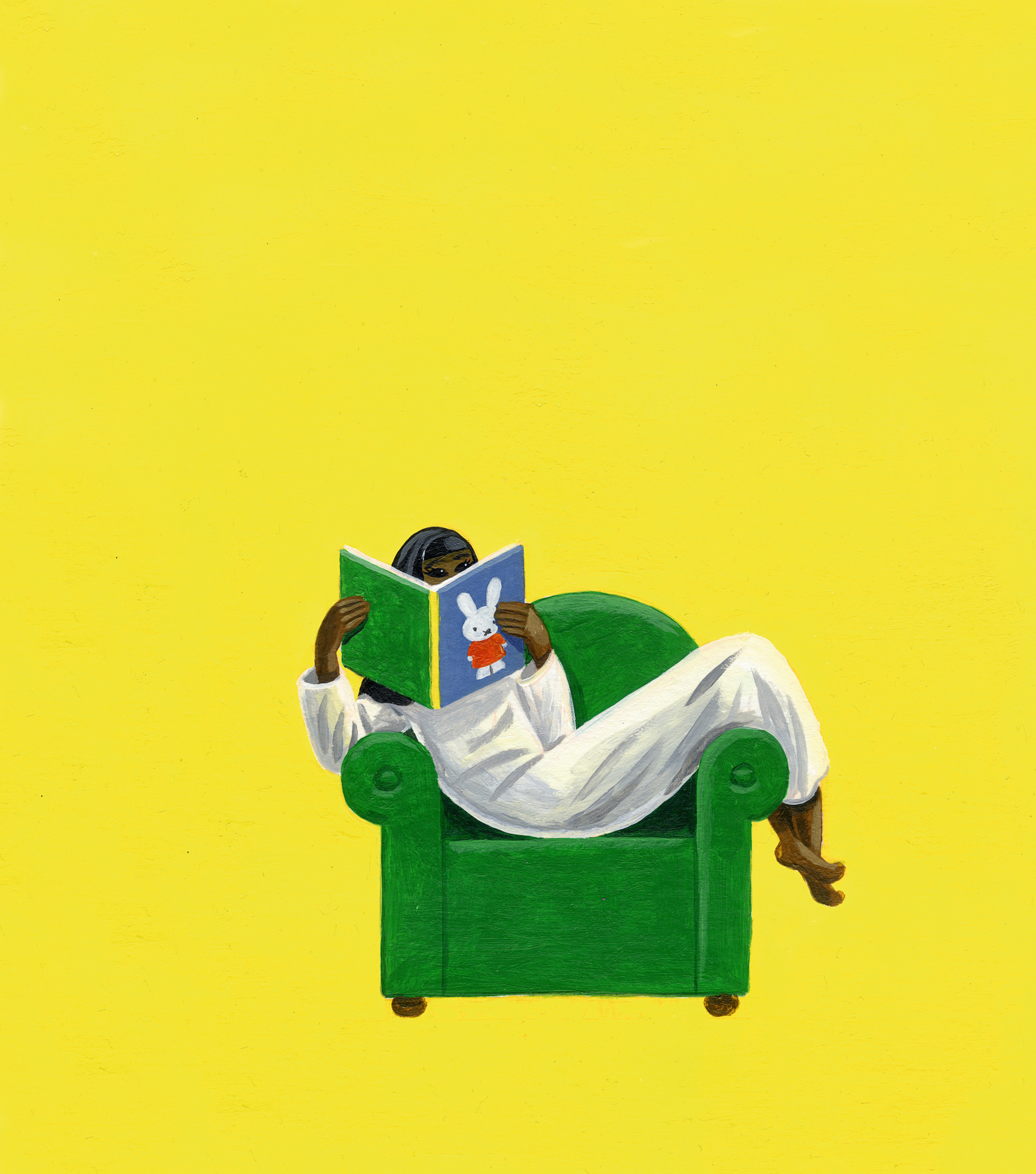
Ilias Mahtab: ‘Children’s books give you a great opportunity to learn Dutch. I read Nijntje (Miffy in English) a popular Dutch children’s book about a little white rabbit.’
16. Watch children’s television
Hariwa Negisa: ‘Dutch children’s television shows are a great way to practice Dutch. My advice: use subtitles when you watch TV, you can install that via “Teletekst”, a television information retrieval service. You can find subtitle-instructions on page 888.’
17. Practice your language with apps and websites
Mardjan Seighali: ‘When I came to The Netherlands there was nothing, but now there are so many websites and apps you can use to learn Dutch, such as oefenen.nl and lingua.ly.’
18. Don’t use your child as an interpreter
Mardjan Seighali: ‘A child should be able to live as a child. It shouldn’t have to deal with the language problems of his or her parents.’
18. Join a library
Ilias Mahtab: ‘a library subscription is very cheap, and gives you access to a bunch of newspapers and books that you can take home with you.’
Making friends and falling in love
20. Mingle!
Ilias Mahtab: ‘Afghans and other refugees have the tendency to stay in their comfort zone, and only hang out with people of their own cultural background. But please, try to connect to Dutch people, even though it’s hard sometimes to make friends.’
21. Go to a church
Laila Jazjy: ‘Christian parishes reach out to refugees, even if they’re not Christian. In the first AZC I stayed, a group of Christians came by, they offered me clothes and Dutch lessons, they were very kind to me.’
22. Visit a bar
Baban Kirkuki: ‘Find a café or bar where they play soft music. Take it easy at first, bring yourself a book or a notebook you can write in. Become a regular so that people can get used to you. They will start to trust you, and then you can start a conversation, for instance by asking what this or that word means.’
23. Go to a community center, or a sports club
Firas Al-Khoury (30, doctor in training, fled Iraq in 2006): ‘Joining a soccer team was my rescue. On the field, and in the “derde helft” (“the third half”, a Dutch expression for drinking or eating something after the game), you can make friends for life.’
24. Don’t take it personal if Dutch people are cold to you
Ozjan van Schuylenburg-Isso: ‘In Syria, when acquaintances run into each other on the street, they’ll make small talk. Here in the Netherlands, it’s different. People often only say “hi” or “bye”. Even if you see them at a party, they’ll often won’t ask you anything.’
25. Do exactly what you say
Firas Al-khoury: ‘In Iraq, people are careful with each other’s feelings. If someone asks you if you have time to help him to move to a new house, you’ll say: “I’ll try, Inshallah.” That actually means no, Iraqis understand that. But Dutch people don’t like that kind of veiled communication. They will only start to trust you, if you do exactly what you say. Yes means yes, no means no, if you have agreed to meet someone at 7 o’clock, then you should be there at exactly that time.’
26. Let your children play with Dutch children
Mardjan Seighali: ‘After a while, your child will want to have playdates with friends at your home. A lot of people feel nervous about the idea of strange children in the house who speak better Dutch then they do. What if you can’t understand what they are talking about? Try to be hospitable anyway, these playdates are very important for the development of your child.’
27. Don’t think Dutch women are ‘easy’
Babak Amiri: ‘A Dutch woman is just as interesting and complicated as a woman in your home country. Dutch women may be different, but that doesn’t make them easier.’
28. Treat a Dutch woman as your equal, not as a princess
Paul Mbikayi (51, civil servant, fled Zaire in 1994): ‘Sometimes I miss the cheerful play between men and women in my home country. Dutch women don’t like it when you court them, and treat them like a princess. They’ll just distrust you when you shower them with compliments and presents.’
29. Don’t approach women on the streets
Baban Kirkuki: ‘When you whistle or shout “Psst, hey girl” on the street, women will take offence. It doesn’t work. Go to a place where you can meet women and talk to them.’
30. Don’t expect Dutch men to take the lead
Ozjan van Schuylenburg-Isso: ‘Dutch men are very passive and not romantic at all. I never thought that I would marry a Dutch guy.’
Working and studying
31. Tell everyone about your talents
Hariwa Negisa: ‘Are you good with children, can you fix cars? Make sure that everyone in the AZC and outside knows about your talents and skills. Even if you don’t have a work permit, you can get started anyway. My father was an interpreter in the AZC, he didn’t get paid for it, but it gave him the opportunity to build his work experience and enrich his CV.’

32. Work in a Turkish supermarket
Adish Asgari (not his real name, fled Iran in 1991): ‘I didn’t wait until I got my permit, living in the AZC drove me crazy, and I wanted to make some money. I found a job in a Turkish supermarket, they often need people, and it’s a good way to make some money.’
32. Find out if your certificates from back home are worth anything here
Firas Al-Khoury: ‘In Iraq I was a trained physician, after passing a few exams I could continue my career as a doctor in The Netherlands. In the process, I got a lot of help from the Dutch student refugees organization UAF.’
33. Follow a ‘schakeljaar’
Mardjan Seighali: ‘In a lot of non-European countries it is customary that the teacher sends information, and the student passively receives. In The Netherlands, the education systems works quite differently. I’d advice refugees to first attend a transition year, a so called “schakeljaar”, it will give you the opportunity to learn all the skills you need to study and get a Dutch degree.’
34. Don’t think that your cultural background is an advantage
Rona Nisar (lawyer, 26, fled Afghanistan in 1998): ‘I often didn’t get the job, because they preferred an applicant with a native tongue. Even when I was more qualified! I speak fluent Russian, but in The Netherlands your cultural background is seldom seen as something positive. They care more about if you use the Dutch articles “de” and “het” correctly.’
35. Get used to the Dutch straightforwardness
Firas Al-Khoury: ‘On the workfloor people will easily tell you: ‘You are doing this all wrong.’ That straightforwardness can make you very insecure. But Dutch people will also tell you honestly what you can do to improve yourself.’
36. Dare to choose a creative occupation
Senad Alic (55, visual artist, fled former Yugoslavia in 1992): ‘I always dreamt of attending art school, but my Bosnian father didn’t approve, he wanted me to have security and status. In the AZC I reinvented myself: I started drawing and painting, I gave art workshops. It turned out I really enjoyed making art with others.’
37. Become an entrepreneur
Morthy Balthazar (42, cheese monger, fled Iran in 1999): ‘It is very difficult to find a job on the Dutch labor market. I’m a certified translator, I have a college degree. But when the local cheese monger decided to quit, I saw an opportunity. Now I sell Dutch cheeses, who would have thought?’
Ozjan van Schuylenburg-Isso: ‘At every job interview, they asked me: do you have work experience? I didn’t, at least not on the Dutch labor market. Now I run my own little shop, specialized in Syrian herbs. My biggest clients? People from the nearby AZC!’
Finding happiness
39. Decide that you are here to stay
Paul Mbikayi: ‘Asylum doesn’t stop as long as you think of travelling on, or going back. For me, the turning point came in 2007. I decided to make a cycling tour and visit all the places where I stayed during my asylum process. While biking, I got rid of all my anger, at every place I thanked the people that helped me. And then, after that tour, I knew: this is where I belong now.’
40. Try not to idealize your home country
Senad Alic: ‘Many refugees live in a dream, they long for the land they left behind. When I went back to Bosnia, I realized that everything had changed. The country that lives on in your mind, doesn’t exist anymore in reality.’
41. Search for something in the Dutch culture that you can defend
Paul Mbikayi: ‘In this land, homosexuals and heterosexuals are equal and a black man can become a mayor. I find that egalitarian and democratic part of the Dutch culture to be beautiful. Go and search a Dutch value that you are willing to defend, that really suits you. If you can’t find anything, you should consider leaving The Netherlands.’
42. Don’t wallow in self-pity
Ilias Mahtab: ‘If you are new in this country, you will have to work five times as hard to achieve anything, in your job as well as in school. Immigrants are often considered a “problem” here. But that can never be an excuse to crawl in a corner and feel sorry for yourself. Work hard, and when you come across shit, walk on, don’t look back.’
43. Shut yourself off from news coverage of your home country
Firas Al-Khoury: ‘I blocked everyone on Facebook who posted about IS, and I asked good friends not to share those messages with me. It is too painful for me, it sucks me right back into the war conflict. I need 100 percent of my brain to be here, so I don’t follow the news there.’
44. Free yourself from suffocating elements of your own culture
Babak Amiri: ‘Remember that you are in The Netherlands now, this is a liberal and free country. Don’t be afraid of that freedom, realize that this is your chance to quit traditions and old habits of your own culture that you never liked, or that stood in your way.’
45. Accept that you will never find complete happiness
Paul Mbikayi: ‘There’s just no place in the world that is better, or more beautiful than home. Sometimes, I get so homesick that I want to stay in bed. Luckily, my wife really understands me, and I have lovely friends who I can talk to. But I will always have to explain myself in The Netherlands, every day again and again.’
Je reactie wordt geplaatst zodra deze is goedgekeurd. Je reactie is geplaatst.